
Walls, roofs, attics, vents
Bee Hive Removal in Los Angeles
When bees have moved into your house, spraying the hole only makes it worse. We open it up, take the honey bees out alive, pull every piece of comb and close it back up.
- Honey bee removal without poison
- All comb and honey pulled out, not left to rot
- Entry points sealed and covered by warranty
Get a Free Bee Removal Quote
Fast reply, usually within minutes. No obligation.
- 5-star rated on Google and Yelp
- Bees relocated to beekeepers
- Same-day and 24/7 service
- Licensed, insured, warranty on sealing
Signs You Have a Hive, Not Just a Few Bees
A few bees on the flowers is normal. A steady stream of bees going in and out of the same crack every day is a colony living in your house. Here’s what most people notice first:
- Bees flying in and out of one spot on the stucco, siding or roof line
- A humming or buzzing sound in a wall, especially in the afternoon
- Dark stains or sticky spots on walls or ceilings from honey
- Bees showing up inside the house around lights or windows
- More bees every week in the same area
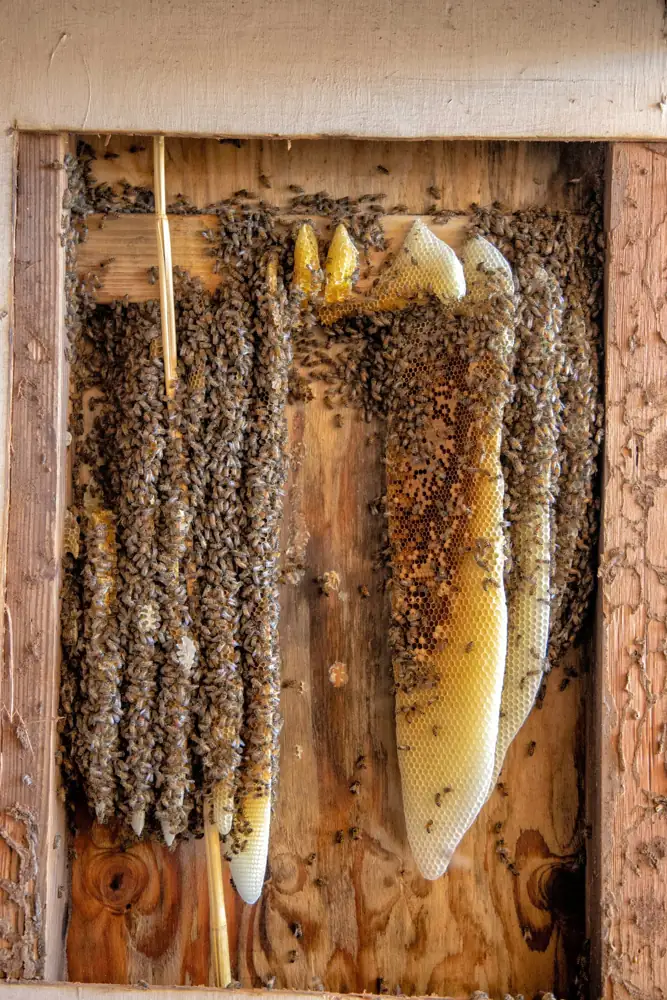
Why Spraying a Hive Is a Bad Idea
We get called after other companies all the time. Someone sprayed the hole, the bees died, and two weeks later the house smells, the wax is melting and there are ants and roaches everywhere. Honey left in a wall soaks into drywall and wood once nobody is there to take care of it.
Live bee hive removal fixes the actual problem. The bees go to a beekeeper, the comb comes out and the cavity gets cleaned so it doesn’t draw in the next swarm. It’s the same reason we tell people not to just plug the hole with bees still inside. They’ll find another way in, sometimes into your living room.
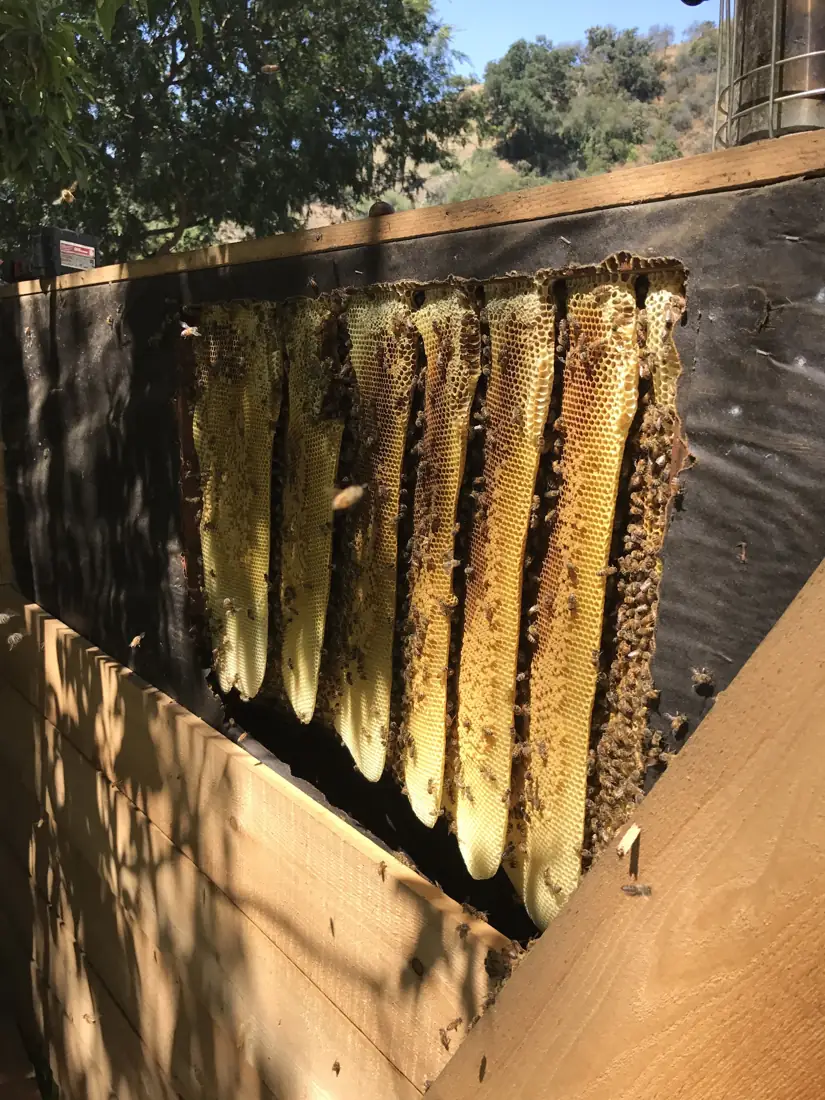
Our Bee Hive Removal Process
- Find the colonyWe figure out where the hive sits inside the wall or roof so we only open what we have to.
- Open it up carefullyStucco, drywall, roof tiles, siding or a soffit panel get opened just enough to reach the comb.
- Bees out aliveThe bees are vacuumed into a ventilated box and the queen goes with them, so the colony stays together.
- Comb and honey outEvery piece of comb gets pulled. Then we clean the cavity so the smell won’t call new bees in.
- Close it back upWe close the opening and seal the gaps bees were using. Sealed spots carry our re-entry warranty.
Where We Find Hives in LA Homes
After years of doing this across Los Angeles, the same spots come up again and again. Bees like a dry, dark space with one small way in.
- Wall cavities behind stucco and siding
- Soffits and eaves on older homes
- Attics and roof voids under clay tile
- Dryer vents, bathroom vents and chimneys
- Block walls, water meter boxes and irrigation boxes
- Under solar panels and inside patio covers
Bee Hive Removal Across Los Angeles County
We remove hives all over LA. Here are some of the cities we’re in every week:
Related Services
If the hive is gone but old comb is still sitting in the wall, our honeycomb removal service takes care of it. Just found a ball of bees on a tree instead? That’s swarm removal, which is quicker and costs less.
Hive Removal Reviews
We discovered a huge beehive tucked under our roofline and needed professional bee removal fast. The team arrived the same day, safely relocated the bees, and sealed off the entry points so they wouldn’t return.
Lex L.
We had a big bee hive on the air vent on the 3rd wall. I especially appreciated their knowledge about bees and their efforts to relocate them. Their price was fair with no surprise charges.
Erica L.
I spotted bees slipping in and out near the attic. He sealed the entry, cleaned out the comb, and treated the area so they wouldn’t return.
Ashley P.
Bee Hive Removal Questions
How long does hive removal take?
An established hive usually takes about two to four hours. Bigger or older colonies inside a roof can take longer.
Will you have to cut into my wall?
Most of the time, yes. The comb has to come out or it causes problems later. We open as little as we can and close it back up when we’re done.
Can’t I just seal the hole?
Not with bees still inside. They’ll chew or find a new way out, sometimes into the house. Get them out first, then seal.
What happens to the honey bees?
They go to local beekeepers. Some of our colonies have gone up to the Central Valley to work fruit orchards.
Got a Hive in the Wall?
Tell us where you see the bees coming and going. We’ll give you a free estimate and can often come out today.
- Free estimates and honest prices
- Honey bees relocated to beekeepers
- Entry points sealed and covered by warranty
Request Your Free Estimate
Fast reply, usually within minutes. No obligation.